3PhaseInsight

Leverage Insights                                        from 3-Phase Meter Data

Digitalization can accelerate the green transition by bridging delays from slow conventional grid reinforcements. What if the DSO could ‘simply’ reconfigure the existing meters to deliver 3-phase data and, based on this data, immediately deploy solutions that increase their locally available grid capacity?

Project Outcomes

  • Data apps – showcase specific insights generated from the dataset
  • Data pipelines and solution candidates – build on data apps to offer tailored value for customers, DSO planner or electricians
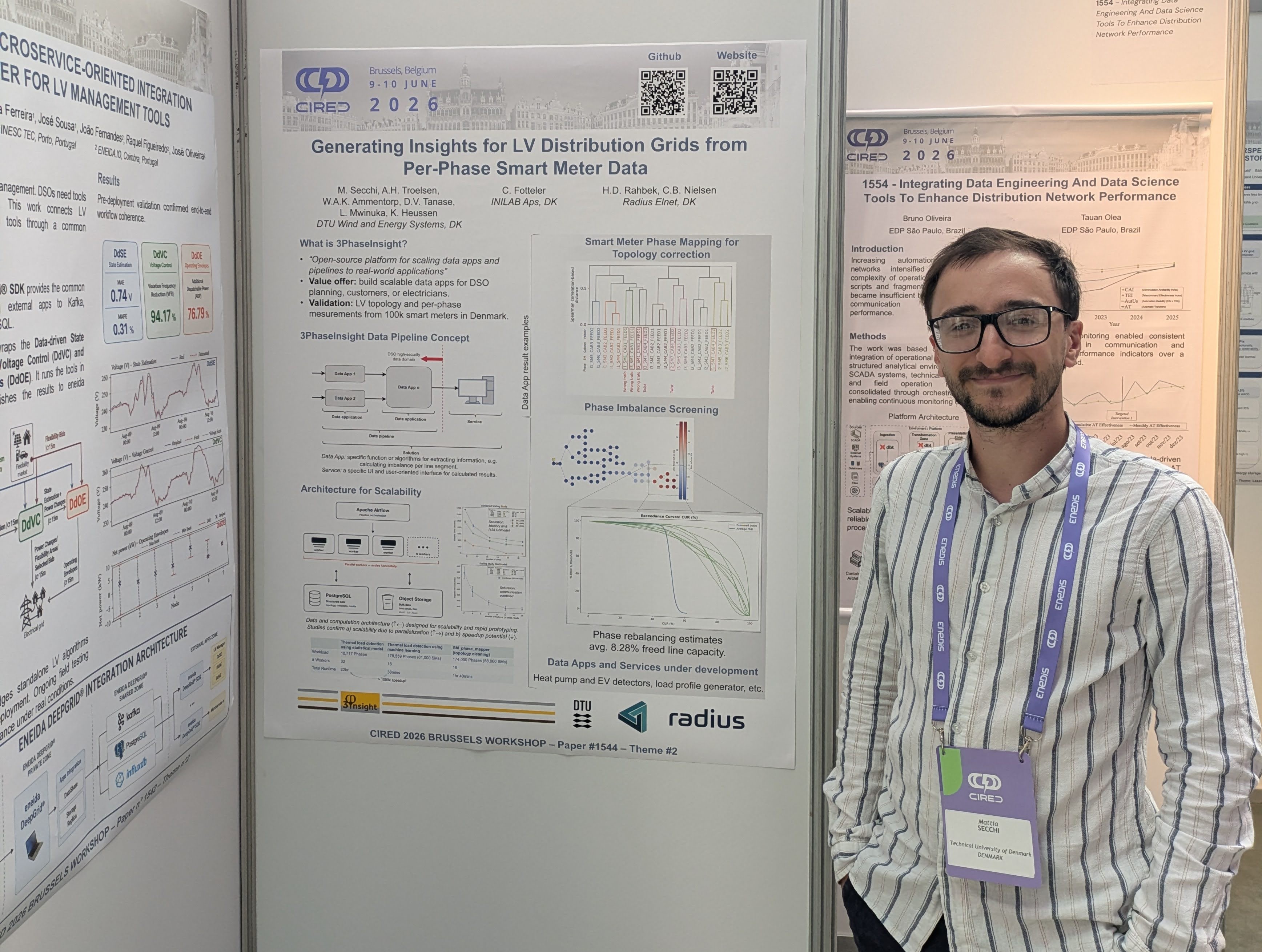
  •   3PhaseInsight open-source platform for scaling data apps and pipelines to real-world applications


Project background

Electrification puts pressure on the distribution grid, which needs more hosting capacity. With the rapid increase of single-phase connected devices, such as heat pumps and low-power EV chargers, phase imbalance and harmonic distortion is becoming even more problematic. DSOs typically do not have information about total harmonic distortion levels, in particular not on per-phase granularity, which complicates the localization of their sources.


The 3PhaseInsight project addresses this by using three-phase measurement data from existing smart meters. By reducing phase imbalance and harmonic distortion, grid capacity can be optimized without heavy infrastructure investments.

The project will test these solutions on real customer data from across Zealand, evaluating their benefits for grid operations, customers, and society through lower costs and greater renewable integration.
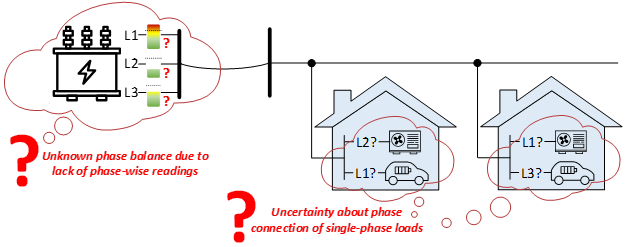


The Challenge of Unknown Phases

In low-voltage grids, many households and devices are connected without clear information about which phase (L1, L2, or L3) they belong to. Without phase-wise measurements, utilities face uncertainty about load balance at the transformer and the exact phase connection of single-phase loads. This lack of visibility can lead to imbalances, reduced efficiency, and difficulties in planning or troubleshooting the network.

Data from 100,000 smart meters

One barrier for the efficient use of existing grid capacity is that DSOs lack three-phase observability. A fundamental building block for enabling these insights and solutions is the reconfiguration of existing smart meters to deliver individual phase measurements for each customer.

An unprecedented large, unique data set was created by the project partner Radius in a large-scale campaign reconfiguring 100,000 already installed smart meters to record such three-phase measurements to enable deep-insight.

No project before has had the opportunity to deliver such robust insights on three phase data value and reported on such a large comparable data set.


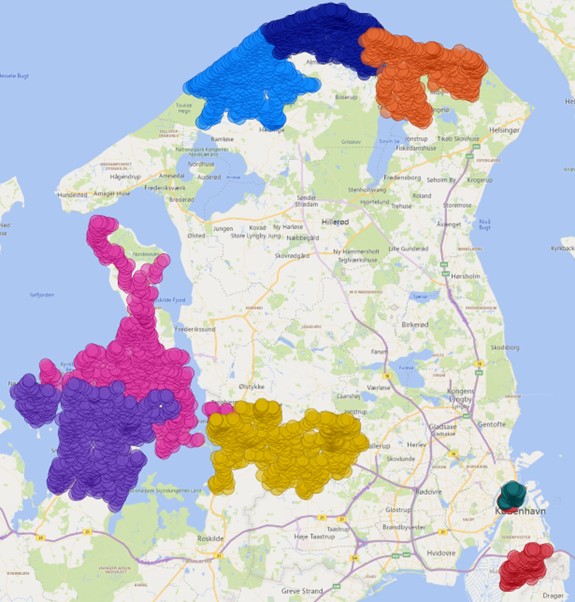
The map shows the distribution of smart meters examined, revealing key information across different area types in the Danish distribution grid

Project Work Packages

Work package 1

Project and Innovation Management

  • Coordinating activities across partners (DTU, Radius, INILAB)
  • Managing the internal innovation process, including use case development and data pipeline design
  • Overseeing dissemination, stakeholder engagement, and final reporting
  • Delivering strategic insights through public reports that highlight opportunities, challenges, and value creation from smart meter data

WORK PACKAGE 2

Data Platform

  • Provide project internal access to a range of agreed three-phase data sets

  • Develop API integration for Energydata.dk to securely transfer the agreed data sets

  • Enable continued data set updates suppoert WP3 during data screening and data app prototyping

  • Develop data model abstraction for data pipeline


WORK PACKAGE 3

Data Apps and Analytics

  • Contribute to the identification of data app algorithms and feasibility of data pipeline design
  • Development and implementation of data app algorithms
  • Produce quantitative results on data app performance on three-phase data set


WORK PACKAGE 4

Solution Data Pipeline

  • Develop complete solution data pipelines scalable to 100.000 meters.
  • Concept for scaling solution to 1.5 mio meters
  • Showcase end-user application based on data pipleline outcome
  • Showcase pipeline applicability to two database environments
  • Release data pipeline as open source solution


Candidate Solutions

Candidate solutions will be built as specific configurations of the data pipeline, based on INILAB’s data architecture, DTU’s data apps, and with data from Radius’ grid and smart meters. Each solution is designed to highlight different stakeholder perspectives: technicians, customers and operators of low-voltage distribution networks.


Candidate solution 1

Phase Connection Assistant (for Technicians)

  • Helps electricians identify the optimal phase for connecting new electrical devices.
  • Aims to distribute electrical loads more evenly across phases.
  • Reduces issues like multiple heat pumps activating on the same phase.
  • Supports a more stable and efficient power grid.
  • Can be used during installation or maintenance to improve system performance.

Candidate solution 2

Harmonic Distortion Heat Map & Source Localizer (for Grid Operators)

  • Monitors voltage quality and identifies harmonic distortion across the grid.
  • Localizes sources of distortion to enable targeted follow-up actions.
  • Facilitates customer engagement when specific sources are identified.
  • Opens the door for future harmonic filtering services, potentially provided by customers with suitable power converters.


Candidate solution 3

Customer Fuse Monitoring Service (for Electricity Customers)

  • Sends SMS alerts when a fuse frequently operates near its limit.
  • Helps prevent overloads and potential outages.
  • Customers can delegate the service to an electrician or provider.
  • Enables phase rebalancing of electrical installations for improved safety and efficiency.


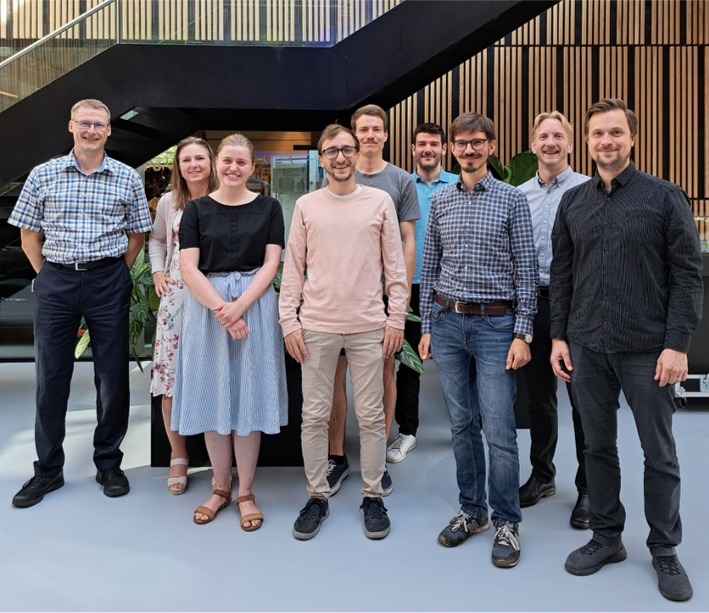
Project Team

Partner Representatives

  • Daniel Frederiksen (INILAB)
  • Carsten Buhl Nielsen (Radius)

Project Lead

Kai Heussen

Kai Heussen Senior Researcher

Consortium

Funding

Funded by ELFORSK under agreement number ELF241-521149.