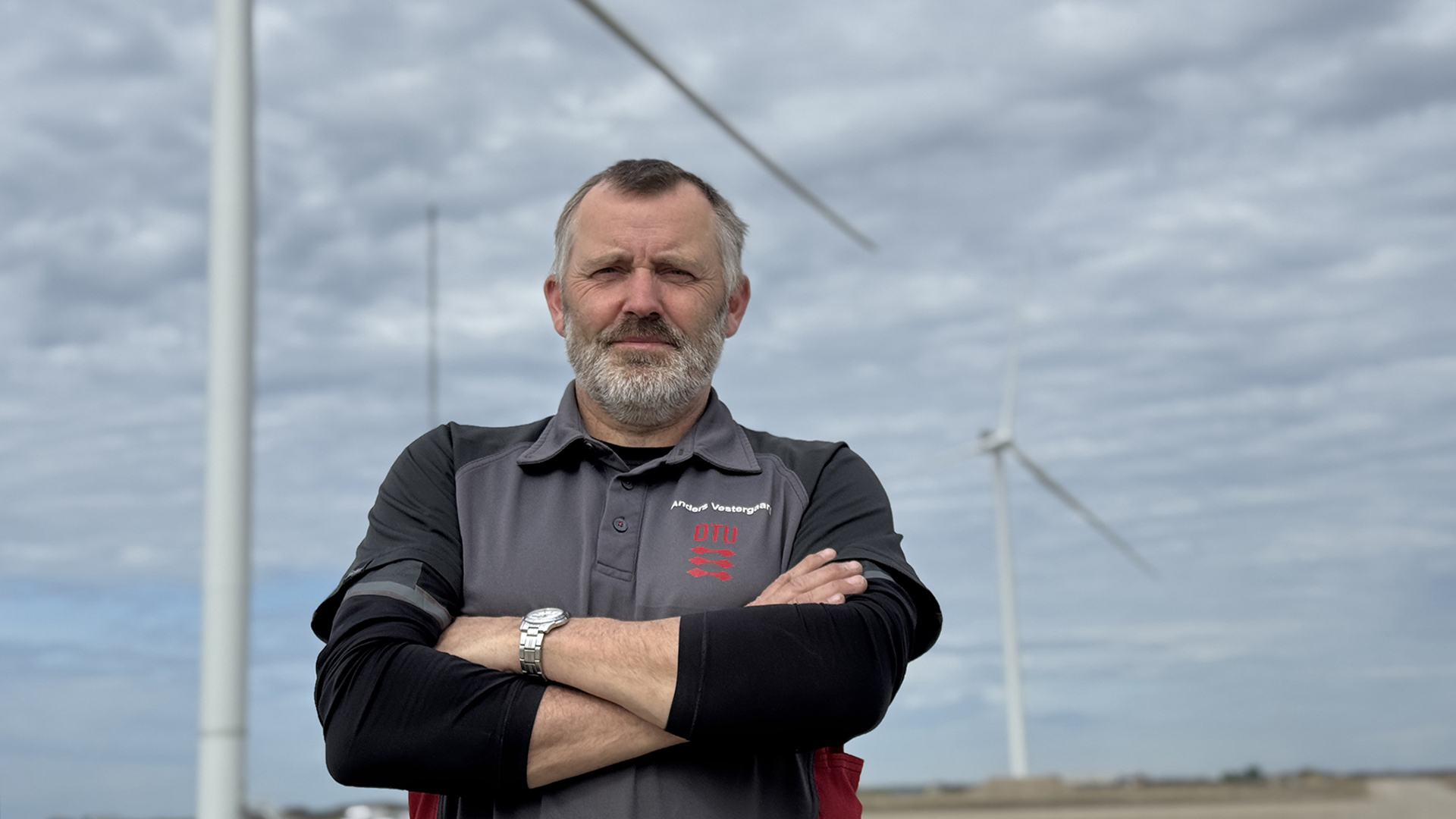
Over the years, Anders Vestergaard has established himself as a skilled and dependable part at the Høvsøre Test Centre, ensuring the smooth daily operation of the test site.
His responsibilities have evolved over time but what keeps him motivated is the mix of tasks that come with running a large test facility. His role as a site manager of the test centre spans planning maintenance, coordinating with contractors, and handling the many small but essential jobs that arise across the site. Some days involve paperwork and planning; others require him to fix a lock, adjust a network connection, or sort out a practical issue for one of the companies testing wind turbines at Høvsøre.
“I’ll probably always be more of a craftsperson than an office man,” he notes — a statement that reflects how he approaches his work.
He also contributes to the planning of the extensive upgrades at both Høvsøre and Østerild, working with advisers and contractors to ensure changes are implemented smoothly, a responsibility he has grown into over the years.
Always committed to wind energy
Anders’ route into wind energy began with his training as an electronics mechanic in 1989, working with wind turbine control systems. After military service, he hoped to work abroad installing wind turbines, but instead found himself in 2001 at Risø’s blade test centre, close to home.
It was his first encounter with research, and although the environment was new, the practical nature of the work suited him well. He helped test new wind turbine blades and supported research projects, often involving new measurement techniques.
When Risø National Laboratory built the Høvsøre Test Centre in 2002, Anders occasionally assisted colleagues there, and in 2007 he moved to Høvsøre full time. Over the years, he has also spent shorter periods working outside DTU, giving him a broader understanding of how test facilities and industry needs develop — experience that continues to shape the way he approaches daily operations and collaboration.
As the wind industry has consolidated and grown, Anders has witnessed wind turbines become larger - and DTU’s facilities expand. Among the milestones that stand out for him is joining Høvsøre full time and later taking part in projects abroad, both onshore and offshore, which gave him a wider perspective on the sector’s development.
Another turning point came in 2014, when he became Site Manager of Høvsøre Test Centre — a shift that required him to move from carrying out tasks himself to planning and coordinating them, reshaping his daily work and responsibilities.
He also played a role in the establishment of Østerild, a major step in expanding Denmark’s testing capacity and strengthening DTU’s position in large scale wind turbine testing. His long view gives him a unique understanding of how both the industry and DTU’s role within it have transformed over two decades.
Collaboration and daily operation
Although Høvsøre at the West Coast of Jutland is located far from DTU's main campuses, collaboration remains central to Anders’ work. He works closely with technicians, project managers, and subcontractors from the companies leasing test stands.
“We have many different companies and subcontractors on site, so it’s important that we work well together and solve things ourselves when something doesn’t quite fit,” he explains.
During recent upgrades, he collaborated closely with advisers from Rambøll — a process he describes as both positive and instructive — and as one of the people visitors meet most often, he sees himself as a practical link between DTU and the companies using the site.
Rather than pointing to individual projects, Anders highlights something more fundamental:
“That DTU’s Høvsøre Test Centre works in daily operation — that’s what I’m most pleased about.”
Given the complexity of the site and the scale of the wind turbines, keeping everything running smoothly is an achievement in itself. Test centre manager Allan Vesth can only agree to this:
“Anders has been and continues to be a cornerstone in bringing advanced research into the practical world,” he says, elaborating:
“He brings even the most refined theories into reality, with a folding ruler in hand and a practical approach, where simple materials, a clever idea and plenty of ingenuity become durable, well-thought-out solutions."
Looking ahead, Anders expects continued adjustments to DTU’s test centres as wind turbine technology evolves, and he hopes to remain part of that development. He also sees opportunities in expanding DTU’s testing capabilities beyond wind energy if the department chooses to move further in that direction.
Anders’ long experience at Høvsøre — combined with a purposeful and consistent approach — continues to support the work carried out at the test centre, a contribution that is likely to remain valuable as DTU’s facilities and focus areas continue to grow.