Simple solution with major impact
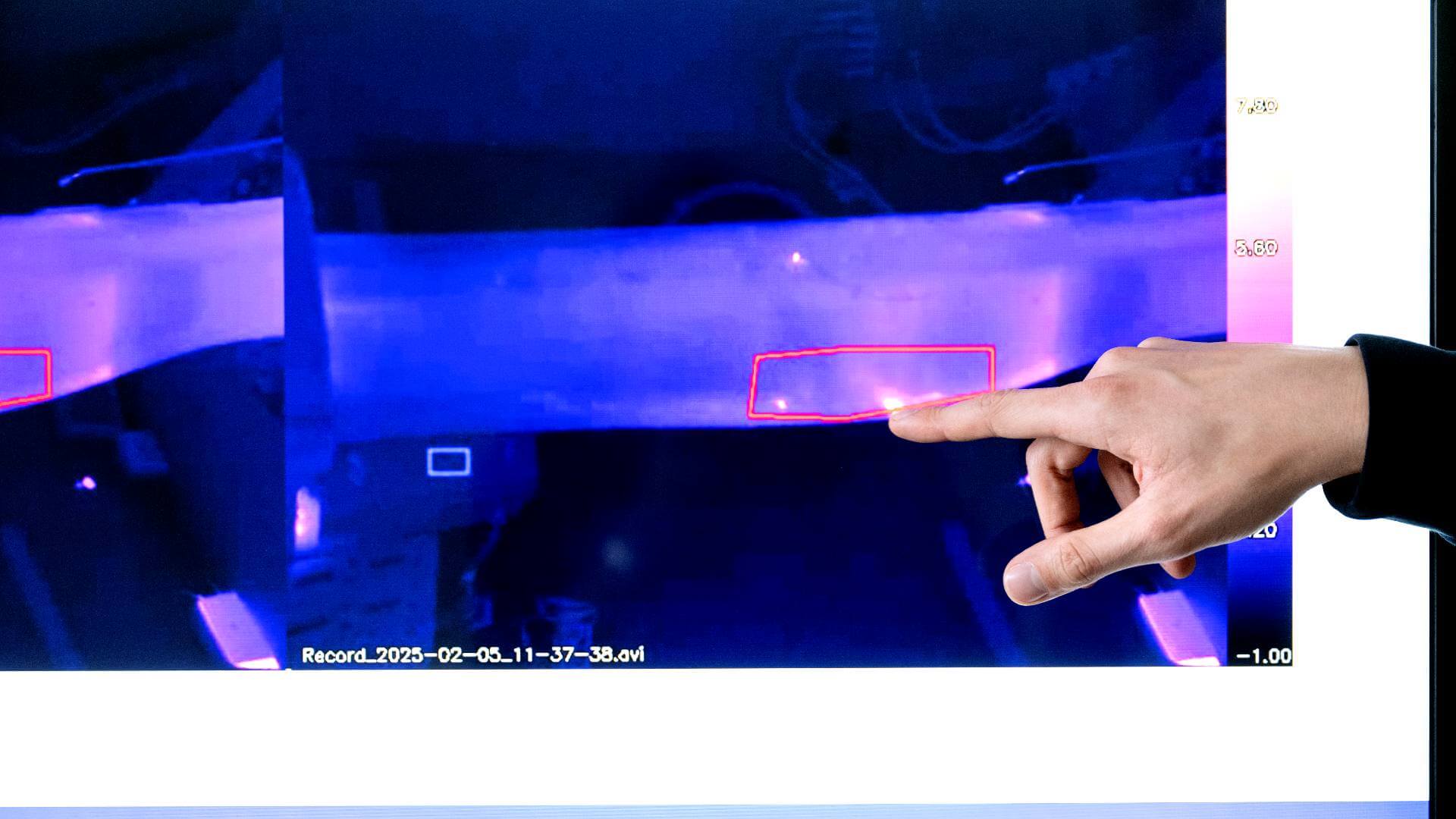
AQUADA can identify damage requiring repair in real time. When a crack in the blade material moves under load, it causes a temperature increase, leaving a trace. The thermal camera captures images of friction heat and translates it into variations in red colour in images of the blades.
The AI model developed by Xiao Chen and his team analyses images and identifies potentially critical damage. This provides a stronger basis for decision-making when a specialist must determine whether damage should be repaired immediately or postponed.
“We can also say what does not need attention, which helps avoid unnecessary shutdowns,” he explains.
The method saves both time and money, while enabling more green electricity to be generated from existing wind turbines, since the turbines no longer need to be stopped for inspection, as is the case today. Offshore wind turbine inspections currently require technicians to travel by vessel and carry out manual inspections, and such routine inspections are typically conducted once a year—or, as in France, every six months—for each individual turbine. The costs quickly add up.
“With this solution, we avoid costly shutdowns and manual inspections. This means faster and safer monitoring, increased energy production, and inspection costs reduced by up to 50 per cent,” says Xiao Chen.
Off-the-shelf hardware plus unique data
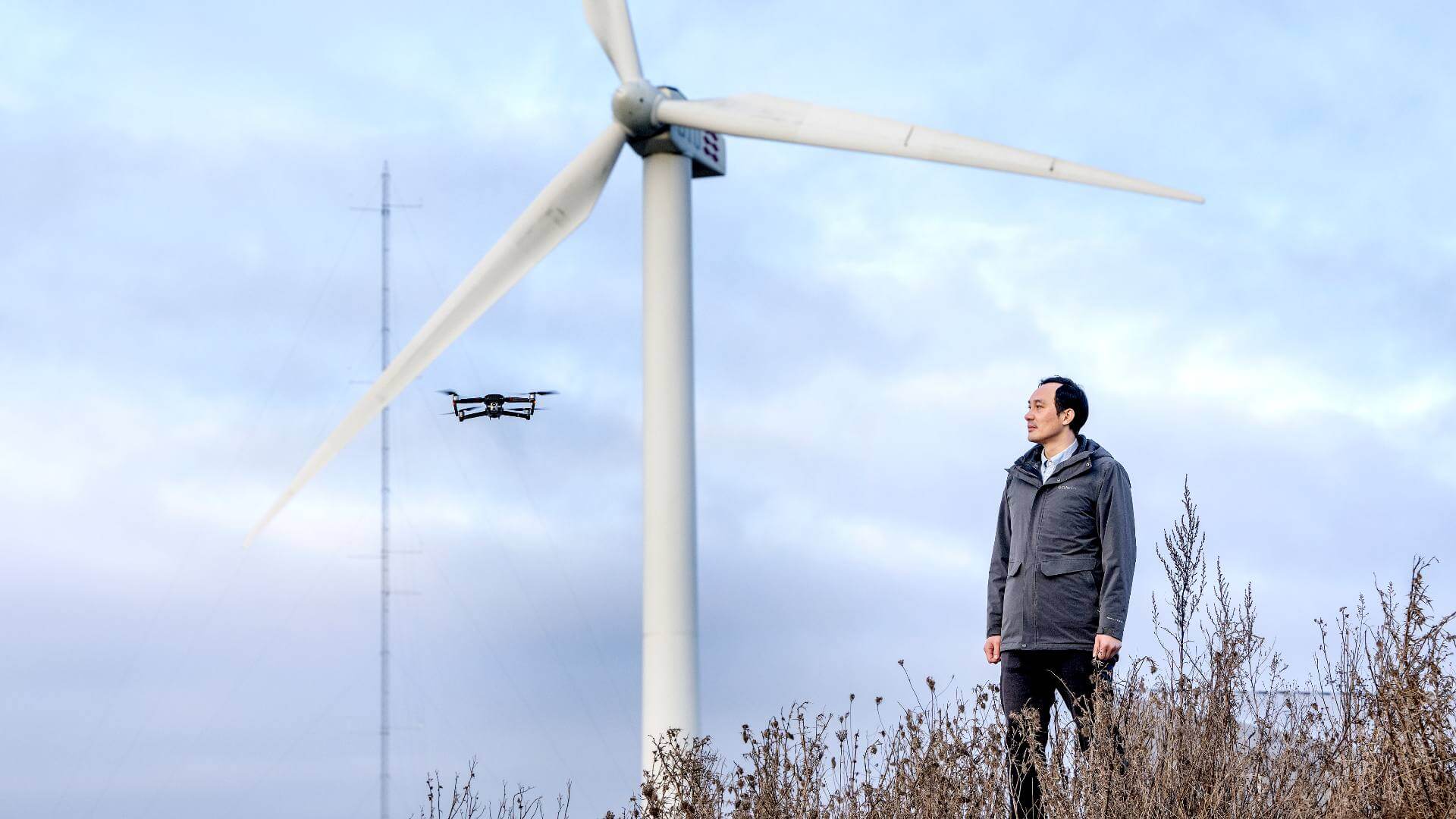
The solution combines drones, thermography—which captures images by measuring thermal radiation—and computer vision, a field within artificial intelligence. The drones replace manual inspections, the thermal camera visualizes where potential damage occurs, and computer vision identifies patterns, pinpoints the damage, and quantifies its progression.
AQUADA is easy to use: the drone and camera are standard, commercially available equipment that users can purchase and operate themselves using a guide. The user then sends the recordings to AQUADA, which processes the data and flags potential critical damage both on and beneath the blade surface. A specialist subsequently decides whether the damage requires immediate repair or can be deferred.
From detection to prognosis
“AQUADA cannot yet predict when damage should be repaired. Training the technology to do that is the next step,” says Xiao Chen.
“This requires a different resolution and significantly more data,” he explains. And here arises a paradox: fortunately, critical damage is very rare. That is good news for wind turbines, but challenging for an AI model that relies on examples for training.
The location and shape of a crack affect the structure in different ways. Therefore, much more data is needed to predict how a crack will develop.
“If an image can indicate that a crack should be repaired in three months rather than immediately, it enables planning and optimization. This further reduces operation and maintenance costs and keeps production running,” Xiao Chen concludes.
The AQUADA technology has already been adopted by industry, which has also been involved throughout the development process.