Rain Erosion Test Facility
The facility researches leading-edge rain erosion, from understanding atmospheric challenges and aerodynamics to exploring materials and composite technologies. Designed primarily for research projects, it is also open to commissioned work, supporting both academic exploration and practical solutions in the wind energy sector.
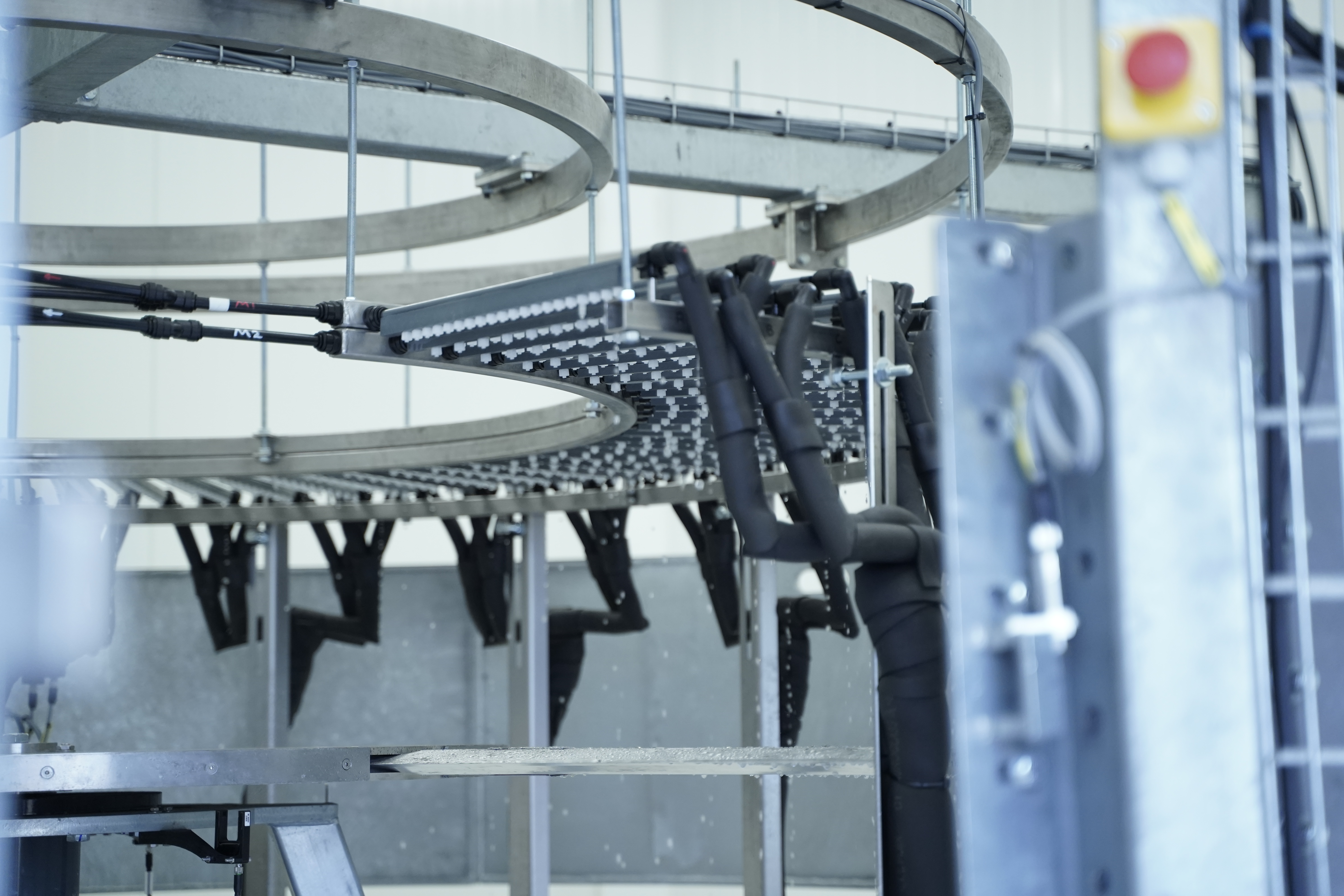
The rain erosion testing facility at DTU is one of the newest facilities within the MaterialsLab. It is a specialized setup designed to evaluate the rain erosion resistance of coating and composite materials used in wind turbine blades, particularly at the leading edge where exposure is most severe following the current industry DNV-GL and ASTM standards. The facility simulates high-speed droplet impacts under controlled conditions, replicating real operational environments. This enables both researchers and industry partners to assess material performance, validate protective solutions, and support the development of coatings that extend blade lifespan and reduce maintenance costs.
Facility features include:
- Enhanced rain flow: Up to 400 l/h (compared to the standard 120 l/h), enabling accelerated testing while maintaining realistic tip speed conditions, resulting in a 2 to 6 times reduction in testing time.
- Dual independent droplet manifolds: 600 and 1200 needle configurations for high-precision simulation of diverse weather conditions
- Advanced thermal control: 50 kW heat pump system ensuring stable test conditions and enabling testing across varying climates (±15°C relative to ambient)
The insights generated from these tests contribute directly to material selection, surface treatment development, and predictive modeling of long-term performance in both offshore and onshore wind environments.
Contact
Nicolai Frost-Jensen Johansen Development engineer Department of Wind and Energy Systems Mobile: +45 40830784 nijoh@dtu.dk